3. 功能验证与分析
由于程序中仅进行了一次的牛顿迭代,所以结果中存在大约0.2%~0.4%的误差。如果对精度要求较高的话,可以增加一次牛顿迭代(Latency 5-7)。采用Active HDL得到的仿真结果如下:
# KERNEL: Time:299505 ns; Input is 17.500000, Output is 0.238976
# KERNEL: Time:299515 ns; Input is 22.545455, Output is 0.210398
# KERNEL: Time:299525 ns; Input is 6.833333, Output is 0.381974
# KERNEL: Time:299535 ns; Input is 18.076923, Output is 0.235181
# KERNEL: Time:299545 ns; Input is 7.000000, Output is 0.377444
# KERNEL: Time:299555 ns; Input is 6.400000, Output is 0.394654
# KERNEL: Time:299565 ns; Input is 185.000000, Output is 0.073432
# KERNEL: Time:299575 ns; Input is 5.500000, Output is 0.426059
# KERNEL: Time:299585 ns; Input is 20.666667, Output is 0.219894
# KERNEL: Time:299595 ns; Input is 13.500000, Output is 0.272166
# KERNEL: Time:299605 ns; Input is 11.200000, Output is 0.298369
# KERNEL: Time:299615 ns; Input is 16.333333, Output is 0.247126
# KERNEL: Time:299625 ns; Input is 15.142857, Output is 0.256539
# KERNEL: Time:299635 ns; Input is 19.500000, Output is 0.226442
# KERNEL: Time:299645 ns; Input is 11.222222, Output is 0.298077
# KERNEL: Time:299655 ns; Input is 16.500000, Output is 0.245921
# KERNEL: Time:299665 ns; Input is 22.545455, Output is 0.210398
# KERNEL: Time:299675 ns; Input is 10.083333, Output is 0.314373
# KERNEL: Time:299685 ns; Input is 1.000000, Output is 0.998307
# KERNEL: Time:299695 ns; Input is 4.500000, Output is 0.471356
# KERNEL: Time:299705 ns; Input is 6.733333, Output is 0.384780
# KERNEL: Time:299715 ns; Input is 196.000000, Output is 0.071381
# KERNEL: Time:299725 ns; Input is 45.000000, Output is 0.148857
# KERNEL: Time:299735 ns; Input is 38.000000, Output is 0.161977
# KERNEL: Time:299745 ns; Input is 7.000000, Output is 0.377444
# KERNEL: Time:299755 ns; Input is 47.200000, Output is 0.145405
# KERNEL: Time:299765 ns; Input is 12.000000, Output is 0.288423
# KERNEL: Time:299775 ns; Input is 5.142857, Output is 0.440817
# KERNEL: Time:299785 ns; Input is 24.875000, Output is 0.200194
# KERNEL: Time:299795 ns; Input is 8.222222, Output is 0.348593
# KERNEL: Time:299805 ns; Input is 6.200000, Output is 0.400996
# KERNEL: Time:299815 ns; Input is 14.454545, Output is 0.262837
# KERNEL: Time:299825 ns; Input is 11.833333, Output is 0.290408
# KERNEL: Time:299835 ns; Input is 8.307692, Output is 0.346769
# KERNEL: Time:299845 ns; Input is 6.285714, Output is 0.398238
# KERNEL: Time:299855 ns; Input is 10.733333, Output is 0.304720
# KERNEL: Time:299865 ns; Input is 38.000000, Output is 0.161977
# KERNEL: Time:299875 ns; Input is 84.000000, Output is 0.109059
# KERNEL: Time:299885 ns; Input is 29.333333, Output is 0.184446
# KERNEL: Time:299895 ns; Input is 12.500000, Output is 0.282712
# KERNEL: Time:299905 ns; Input is 10.000000, Output is 0.315686
# KERNEL: Time:299915 ns; Input is 9.000000, Output is 0.332953
# KERNEL: Time:299925 ns; Input is 2.000000, Output is 0.706930
# KERNEL: Time:299935 ns; Input is 27.375000, Output is 0.190843
# KERNEL: Time:299945 ns; Input is 27.000000, Output is 0.192154
# KERNEL: Time:299955 ns; Input is 22.400000, Output is 0.211090
# KERNEL: Time:299965 ns; Input is 0.727273, Output is 1.171236
# KERNEL: Time:299975 ns; Input is 1.916667, Output is 0.721861
# KERNEL: Time:299985 ns; Input is 11.000000, Output is 0.301036
# KERNEL: Time:299995 ns; Input is 3.857143, Output is 0.508320
# KERNEL:
# KERNEL: =======================================
# KERNEL: Simulation finished Successfully!
# KERNEL: =======================================
来源: Latticesemi
3. 功能验证与分析
由于程序中仅进行了一次的牛顿迭代,所以结果中存在大约0.2%~0.4%的误差。如果对精度要求较高的话,可以增加一次牛顿迭代(Latency 5-7)。采用Active HDL得到的仿真结果如下:
# KERNEL: Time:299505 ns; Input is 17.500000, Output is 0.238976
# KERNEL: Time:299515 ns; Input is 22.545455, Output is 0.210398
# KERNEL: Time:299525 ns; Input is 6.833333, Output is 0.381974
# KERNEL: Time:299535 ns; Input is 18.076923, Output is 0.235181
# KERNEL: Time:299545 ns; Input is 7.000000, Output is 0.377444
# KERNEL: Time:299555 ns; Input is 6.400000, Output is 0.394654
# KERNEL: Time:299565 ns; Input is 185.000000, Output is 0.073432
# KERNEL: Time:299575 ns; Input is 5.500000, Output is 0.426059
# KERNEL: Time:299585 ns; Input is 20.666667, Output is 0.219894
# KERNEL: Time:299595 ns; Input is 13.500000, Output is 0.272166
# KERNEL: Time:299605 ns; Input is 11.200000, Output is 0.298369
# KERNEL: Time:299615 ns; Input is 16.333333, Output is 0.247126
# KERNEL: Time:299625 ns; Input is 15.142857, Output is 0.256539
# KERNEL: Time:299635 ns; Input is 19.500000, Output is 0.226442
# KERNEL: Time:299645 ns; Input is 11.222222, Output is 0.298077
# KERNEL: Time:299655 ns; Input is 16.500000, Output is 0.245921
# KERNEL: Time:299665 ns; Input is 22.545455, Output is 0.210398
# KERNEL: Time:299675 ns; Input is 10.083333, Output is 0.314373
# KERNEL: Time:299685 ns; Input is 1.000000, Output is 0.998307
# KERNEL: Time:299695 ns; Input is 4.500000, Output is 0.471356
# KERNEL: Time:299705 ns; Input is 6.733333, Output is 0.384780
# KERNEL: Time:299715 ns; Input is 196.000000, Output is 0.071381
# KERNEL: Time:299725 ns; Input is 45.000000, Output is 0.148857
# KERNEL: Time:299735 ns; Input is 38.000000, Output is 0.161977
# KERNEL: Time:299745 ns; Input is 7.000000, Output is 0.377444
# KERNEL: Time:299755 ns; Input is 47.200000, Output is 0.145405
# KERNEL: Time:299765 ns; Input is 12.000000, Output is 0.288423
# KERNEL: Time:299775 ns; Input is 5.142857, Output is 0.440817
# KERNEL: Time:299785 ns; Input is 24.875000, Output is 0.200194
# KERNEL: Time:299795 ns; Input is 8.222222, Output is 0.348593
# KERNEL: Time:299805 ns; Input is 6.200000, Output is 0.400996
# KERNEL: Time:299815 ns; Input is 14.454545, Output is 0.262837
# KERNEL: Time:299825 ns; Input is 11.833333, Output is 0.290408
# KERNEL: Time:299835 ns; Input is 8.307692, Output is 0.346769
# KERNEL: Time:299845 ns; Input is 6.285714, Output is 0.398238
# KERNEL: Time:299855 ns; Input is 10.733333, Output is 0.304720
# KERNEL: Time:299865 ns; Input is 38.000000, Output is 0.161977
# KERNEL: Time:299875 ns; Input is 84.000000, Output is 0.109059
# KERNEL: Time:299885 ns; Input is 29.333333, Output is 0.184446
# KERNEL: Time:299895 ns; Input is 12.500000, Output is 0.282712
# KERNEL: Time:299905 ns; Input is 10.000000, Output is 0.315686
# KERNEL: Time:299915 ns; Input is 9.000000, Output is 0.332953
# KERNEL: Time:299925 ns; Input is 2.000000, Output is 0.706930
# KERNEL: Time:299935 ns; Input is 27.375000, Output is 0.190843
# KERNEL: Time:299945 ns; Input is 27.000000, Output is 0.192154
# KERNEL: Time:299955 ns; Input is 22.400000, Output is 0.211090
# KERNEL: Time:299965 ns; Input is 0.727273, Output is 1.171236
# KERNEL: Time:299975 ns; Input is 1.916667, Output is 0.721861
# KERNEL: Time:299985 ns; Input is 11.000000, Output is 0.301036
# KERNEL: Time:299995 ns; Input is 3.857143, Output is 0.508320
# KERNEL:
# KERNEL: =======================================
# KERNEL: Simulation finished Successfully!
# KERNEL: =======================================
来源: Latticesemi

 举报
举报

 作者: Xianyou Li
 ,可以先构造函数
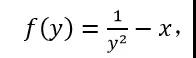 该函数的正根即为要求的解。牛顿迭代法的精髓在于,可以先猜测一个值
 ,然后基于这个值,采用以下的迭代式,以获得更加精确的值:
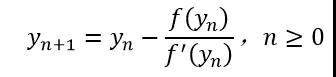 为了方便计算,上式可以简化为:
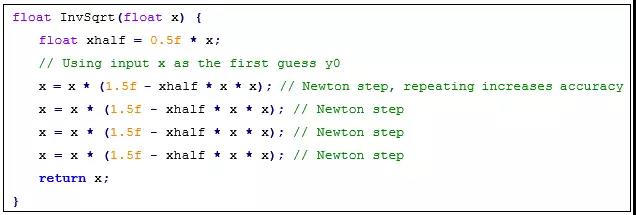
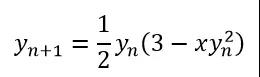 该算法的C语言实现如下:
 The Magic Number
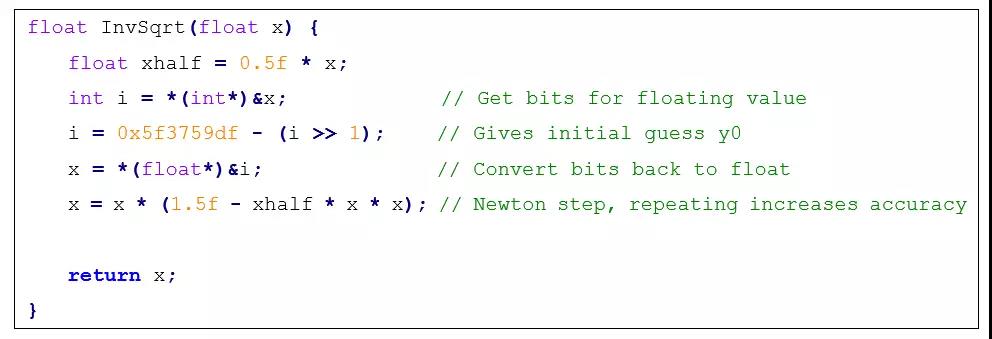 John Carmack牛掰的地方在于,他采用了一个神奇的常数0x5f3759df来计算初始猜测值。普渡大学的数学家Chris Lomont看了以后觉得有趣,决定要研究一下Carmack弄出来的这个猜测值有什么奥秘。Lomont也是个牛人,在精心研究之后从理论上也推导出一个最佳猜测值,和Carmack的数字非常接近, 0x5f37642f。传奇并没有在这里结束。Lomont计算出结果以后非常满意,于是拿自己计算出的起始值和Carmack的神秘数字做比赛,看看谁的数字能够更快更精确的求得平方根。结果是Carmack赢了……谁也不知道Carmack是怎么找到这个数字的。最后Lomont怒了,采用暴力方法一个数字一个数字试过来,终于找到一个比Carmack数字要好上那么一丁点的数字,虽然实际上这两个数字所产生的结果非常近似,这个暴力得出的数字是0x5f375a86。
 即,
即,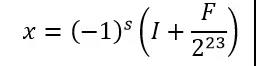 RTL视图如下:
 其中,牛顿迭代的RTL视图如下:
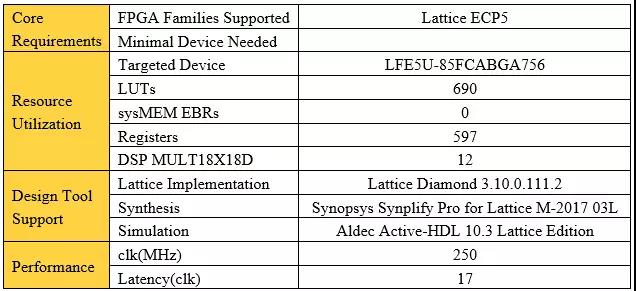
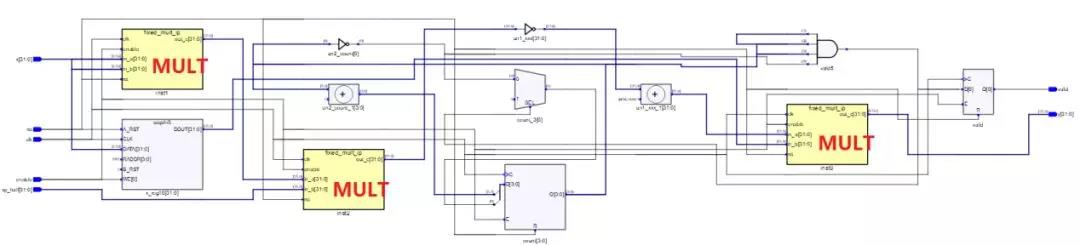 详细信息如下:
 如果对Latency要求较高的话,还可以将迭代公式转化为:
 此时,牛顿迭代的RTL视图如下:
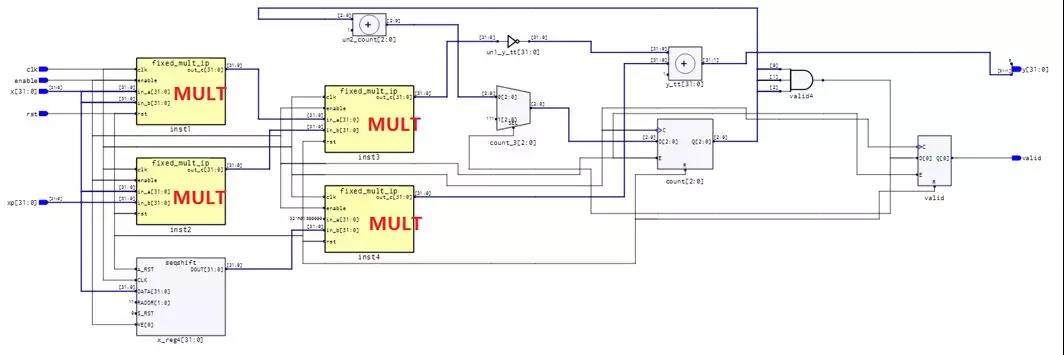 详细信息如下:
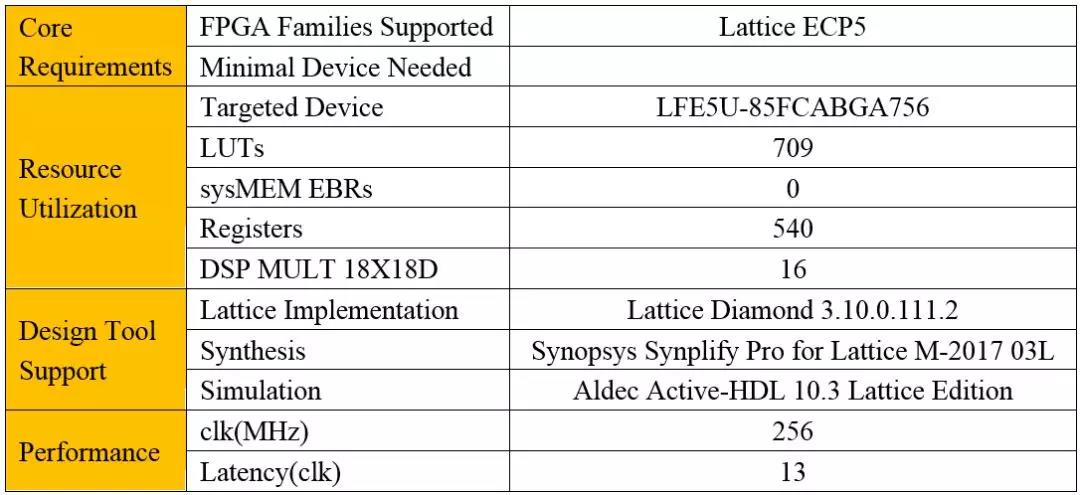 从表中可以发现,Latency从17降低到了13,代价是多使用了一个乘法器模块(4个MULT 18X18D)。其中牛顿迭代的乘法器全部采用了Pipeline结构,并且添加了输入寄存器。如果对频率要求不是特别高的话,还可以将Latency进一步降低到10~11。


